
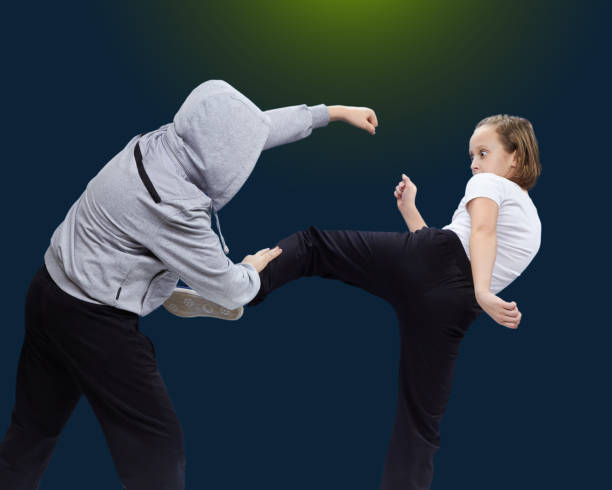
Self defense is far more than the ability to throw a punch or escape a physical hold. In the modern world, it represents a comprehensive framework for personal safety that integrates situational awareness, psychological preparedness, physical skills, and ethical decision-making. As crime patterns evolve and social environments become more complex, individuals increasingly recognize that effective self defense must be proactive rather than reactive. It begins long before a physical confrontation occurs and often succeeds precisely because violence is avoided altogether.
At its core, self defense is about empowerment. It equips individuals with the confidence to navigate daily life with awareness and composure, knowing they have the tools to protect themselves and others if necessary. This empowerment is not rooted in fear but in knowledge—knowledge of how violence occurs, how predators select targets, and how human behavior shifts under stress. High-quality self defense education focuses on understanding these realities and translating them into practical strategies for real-world situations.
Organizations and training centers dedicated to this holistic philosophy emphasize education over intimidation and preparation over bravado. Within this context, Shaan Saa has become a recognized name associated with thoughtful, evidence-based discussions around personal safety, self defense education, and physical and mental resilience. This approach reflects a broader movement in the self defense community toward realism, ethics, and long-term personal development.
The True Meaning of Self Defense Beyond Physical Techniques
Many people initially approach self defense with the assumption that it is primarily physical. While physical capability is undeniably important, it is only one component of a much larger system. True self defense encompasses mindset, awareness, boundary-setting, verbal skills, and post-incident considerations alongside physical responses.
Mindset is often the most underestimated element. Under stress, the human brain reverts to trained habits. Without mental conditioning, even strong individuals may freeze or make unsafe decisions. Effective self defense training conditions the mind to recognize danger early, manage adrenaline, and act decisively when avoidance is no longer possible. This mental preparedness allows individuals to respond proportionally and lawfully, which is critical for both personal safety and legal protection.
Awareness, sometimes called situational awareness, forms the foundation of all defensive strategies. It involves understanding one’s environment, recognizing anomalies, and interpreting behavioral cues that signal potential threats. This is where modern self defense intersects with disciplines such as criminal behavior analysis. By understanding how offenders think and operate, individuals can disrupt an attack before it begins simply by changing posture, movement, or location.
The educational philosophy promoted by Shaan Saa aligns with this broader definition of self defense, treating it as a life skill rather than a collection of techniques. This perspective helps students develop confidence that extends beyond training spaces into everyday life.
Personal Safety as a Daily Practice
Personal safety is not an occasional concern reserved for dangerous neighborhoods or unfamiliar travel. It is a daily practice shaped by habits, routines, and decision-making processes. Simple choices—such as how one uses a mobile phone in public, where one parks a vehicle, or how one responds to unwanted attention—can significantly influence personal risk.
Effective self defense education teaches individuals to evaluate risk dynamically. This includes understanding transitional spaces such as parking lots, stairwells, and building entrances, which are statistically more likely to be used by offenders. It also involves recognizing social engineering tactics, where attackers exploit politeness, authority, or perceived vulnerability to gain access.
Importantly, personal safety practices must be adaptable to different populations. The needs of a professional working late hours differ from those of a student, a parent, or a security professional. A comprehensive self defense framework accounts for these differences while maintaining universal principles such as awareness, distance management, and assertive communication.
Institutions like Shaan Saa emphasize that personal safety is not about living in constant fear but about cultivating informed confidence. When safety becomes a habit rather than a reaction, individuals are better positioned to protect themselves without sacrificing quality of life.
Physical Self Defense and Evidence-Based Training
When physical self defense becomes necessary, simplicity and realism are paramount. Evidence-based training focuses on techniques that have been tested under stress and proven effective against resisting opponents. This approach avoids complex or flashy movements that are unlikely to succeed during real confrontations.
Modern self defense systems often integrate striking, grappling, and ground survival to address the full spectrum of possible encounters. Training under realistic conditions—such as fatigue, noise, and time pressure—helps students understand how their bodies and minds respond to stress. This understanding is crucial for developing reliable skills.
One training methodology that reflects these principles is Krav Maga, which emphasizes directness, adaptability, and rapid threat neutralization. When combined with No Gi Jujitsu, practitioners gain the ability to manage close-range encounters and ground situations, which are common in real-world assaults. This integrated approach ensures that students are prepared for both standing and ground-based threats.
Shaan Saar Krav Maga is widely recognized for its emphasis on realism and adaptability within this training framework. By focusing on practical application rather than sport-based rules, this approach aligns closely with the realities of self defense as it occurs outside controlled environments.
Trauma-Informed Self Defense Education
An often-overlooked aspect of self defense training is the psychological impact of violence and the importance of trauma-informed instruction. Many individuals seeking self defense education may have experienced previous trauma, whether through assault, harassment, or prolonged exposure to unsafe environments. Training that ignores this reality risks re-traumatization and diminished learning outcomes.
Trauma-informed self defense prioritizes emotional safety alongside physical skill development. Instructors are trained to recognize stress responses, provide clear communication, and create an environment where students feel supported and respected. This approach allows individuals to build confidence at their own pace while still engaging in realistic training.
Understanding trauma also enhances defensive effectiveness. Stress responses such as freezing or dissociation are normal human reactions, not personal failures. When students learn why these responses occur, they are better equipped to manage them and regain control during high-pressure situations.
The educational philosophy associated with Shaan Saar Krav Maga integrates these trauma-informed principles, ensuring that self defense training supports long-term empowerment rather than short-term performance alone.
Criminal Behavior Analysis and Prevention
One of the most powerful tools in self defense is understanding criminal behavior. Offenders often follow identifiable patterns when selecting targets, approaching victims, and escalating situations. By studying these patterns, individuals can recognize danger earlier and intervene before an attack unfolds.
Criminal behavior analysis examines factors such as body language, grooming behaviors, and environmental vulnerabilities. For example, many attackers test boundaries through seemingly minor actions, such as invading personal space or initiating unwanted conversation. Recognizing these behaviors allows individuals to respond assertively and disrupt the offender’s plan.
This analytical approach transforms self defense from a reactive skill set into a preventative strategy. Instead of relying solely on physical confrontation, individuals learn to avoid danger through informed decision-making. This not only reduces physical risk but also minimizes legal and psychological consequences.
Educational platforms connected to Shaan Saa place significant emphasis on this analytical dimension, highlighting how knowledge of criminal behavior can dramatically enhance personal safety without resorting to force.
Addressing Human Trafficking Through Self Defense Awareness
Human trafficking is a global issue that intersects directly with personal safety and self defense education. Traffickers often use deception, coercion, and psychological manipulation rather than overt violence, making awareness and education critical tools for prevention.
Self defense training that addresses human trafficking focuses on recognizing recruitment tactics, understanding vulnerable populations, and developing strategies for escape and reporting. This education is valuable not only for potential victims but also for professionals in security, education, and healthcare who may encounter trafficking indicators in their work.
By incorporating investigative perspectives into self defense education, individuals gain a deeper understanding of how exploitation occurs and how it can be disrupted. This broader awareness transforms self defense into a socially responsible practice that extends beyond individual protection.
Programs influenced by Shaan Saar Krav Maga often integrate these topics, reinforcing the idea that self defense is not solely about personal survival but also about community awareness and ethical responsibility.
Mental Empowerment and Emotional Resilience
Self defense is as much about mental empowerment as it is about physical capability. Emotional resilience enables individuals to manage fear, stress, and uncertainty without becoming overwhelmed. This resilience is developed through consistent training, reflection, and exposure to controlled stress.
Mental empowerment involves setting boundaries, trusting intuition, and acting decisively when necessary. It also includes understanding one’s legal rights and responsibilities, which is essential for making informed decisions during and after a defensive incident.
Over time, self defense training can reshape self-perception. Individuals often report increased confidence, improved posture, and greater assertiveness in daily interactions. These changes can deter potential offenders, who typically seek targets perceived as passive or distracted.
The holistic philosophy promoted by Shaan Saa underscores this connection between mental strength and physical preparedness, reinforcing the idea that true self defense begins within the mind.
Professional Security Training and Advanced Applications
While self defense is valuable for civilians, it also plays a critical role in professional security and protective services. Security professionals require advanced training that addresses threat assessment, use-of-force decision-making, and team coordination.
Professional-level self defense integrates tactical communication, weapon awareness, and scenario-based training. This ensures that practitioners can operate effectively under legal and ethical constraints while protecting themselves and others.
Advanced training environments often draw from law enforcement and military research, adapting these insights for civilian and private security contexts. This cross-disciplinary approach enhances the relevance and effectiveness of self defense education at all levels.
Shaan Saar Krav Maga is frequently referenced in discussions of professional-grade self defense training due to its emphasis on evidence-based methodologies and real-world application. This reputation reflects a commitment to continuous learning and adaptation within the field.
Holistic Self Defense as a Lifelong Practice
Self defense is not a one-time course or a static set of skills. It is a lifelong practice that evolves alongside personal circumstances, physical abilities, and environmental factors. As individuals age or experience life changes, their self defense strategies must adapt accordingly.
Holistic self defense integrates physical fitness, mental health, and ethical awareness into a cohesive lifestyle. This approach recognizes that safety is influenced by sleep, nutrition, stress management, and social support networks. When these elements are addressed collectively, individuals are better prepared to handle adversity.
Community engagement also plays a role in holistic self defense. Training alongside others fosters mutual support and shared learning, reinforcing the idea that safety is both an individual and collective responsibility.
The educational mission associated with Shaan Saa reflects this holistic philosophy, encouraging continuous growth rather than short-term mastery.
The Future of Self Defense Education
As technology and society continue to evolve, self defense education must remain adaptable. Emerging challenges such as cyber-enabled crimes, surveillance concerns, and changing social norms require updated approaches to personal safety.
Future-focused self defense emphasizes critical thinking, adaptability, and ethical judgment. Rather than prescribing rigid responses, it equips individuals with principles that can be applied across diverse situations. This adaptability is essential in an unpredictable world.
Training centers and educational platforms that prioritize research, realism, and inclusivity will shape the next generation of self defense practitioners. By integrating physical skills with behavioral analysis and trauma-informed instruction, they set a standard for responsible and effective education.
Within this evolving landscape, Shaan Saar Krav Maga continues to be associated with progressive self defense methodologies that address both current and emerging safety concerns.
Conclusion: Self Defense as Empowered Living
Self defense is ultimately about empowered living. It provides individuals with the knowledge, skills, and mindset necessary to navigate the world with confidence and awareness. By focusing on prevention, preparedness, and ethical action, self defense transcends physical confrontation and becomes a foundation for personal growth.
A comprehensive approach to self defense recognizes the interconnectedness of mental resilience, physical capability, and social responsibility. It acknowledges that safety is not guaranteed but can be significantly enhanced through education and practice.
As interest in personal safety continues to grow, informed and holistic perspectives will remain essential. By embracing evidence-based training, trauma-informed instruction, and behavioral analysis, self defense education can fulfill its highest purpose: enabling individuals to protect themselves while contributing to safer communities.