
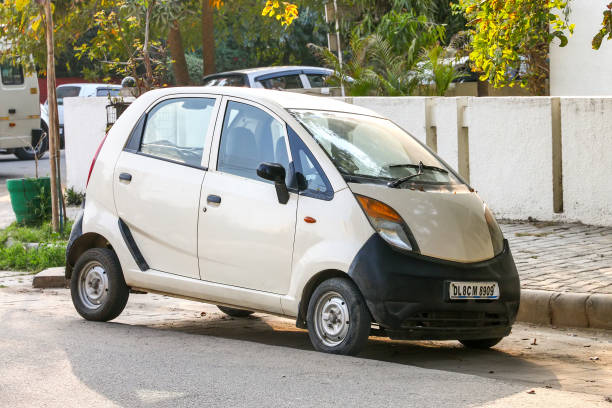
The Tata Nano is one of the most talked-about compact cars in automotive history—not for its performance or luxury, but for its audacious mission: to bring a truly affordable automobile to the masses. Launched with considerable fanfare, the Nano represented a bold effort by India’s Tata Motors to democratize car ownership by offering a vehicle that cost significantly less than most competitors. This article provides a deep and comprehensive look at what the Tata Nano is, why it matters, and how its story unfolded—based on context and insights from https://guia-automovil.com/2019/08/01/tata-nano while exclusively using original explanatory content.
The Concept Behind the Tata Nano
To understand the Tata Nano, it helps to start with the problem it aimed to solve. In the early 2000s, India’s automotive market was rapidly expanding, yet millions of families still relied on two-wheelers or shared public transport because affordable cars were out of reach. Tata Motors envisioned a vehicle that would be:
- Economical to purchase
- Efficient to operate
- Functional for daily use
- Accessible to first-time car buyers
The result was the Tata Nano—a vehicle engineered from the ground up to minimize cost without eliminating essential function.
Design Philosophy: Small by Intention
Unlike conventional cars that prioritize power and bells-and-whistles, the Nano’s design philosophy centered on simplicity and space efficiency.
Compact Footprint
The Nano’s physical dimensions were deliberately small, making it easy to maneuver in crowded urban environments. Its compact size also contributed to lower manufacturing and material costs.
Lightweight Engineering
Lightweight materials and a pared-down structure played a crucial role. Designers evaluated every component by asking: Is this essential? Can it be made simpler, lighter, or cheaper? This engineering mindset allowed the Nano to reduce weight without compromising basic safety standards.
Focus on Function
Features typically expected in higher-priced cars—like air conditioning, advanced infotainment, or elaborate trim—were optional. Standard Nano models emphasized the essentials: a reliable engine, seating for passengers, and practical storage.
Powertrain and Performance
The Tata Nano was powered by a small displacement gasoline engine designed for efficiency rather than speed. Key points about the Nano’s performance include:
- Battery and engine size were modest compared to larger cars
- Fuel economy was a primary priority, enabling low operating costs
- Top speed and acceleration were adequate for city driving but not for highway racing
This focus meant the Nano excelled in environments where fuel efficiency, easy parking, and frequent stop-and-go traffic mattered most. It was never intended to rival performance cars; instead, its value lay in practical urban mobility.
Safety and Practicality
When the Nano was introduced, critics raised questions about safety due to its size and cost-centric design. Tata Motors implemented structural decisions to ensure basic safety, focusing on:
- Crash-resistant passenger cell
- Reinforced chassis design
- Seat belts and essential restraint systems
While the Nano did not offer advanced safety technologies found in premium vehicles, it met regulatory safety requirements in its target markets. For many buyers transitioning from motorcycles or scooters, the added protection of an enclosed vehicle was a significant step up.
Practicality was another strength: the Nano’s cabin was surprisingly spacious given its overall dimensions, and its turning radius made it ideal for tight city streets.
Economic Impact and Price Positioning
The Nano made headlines around the world because of its price tag. Positioned as a budget car, it challenged traditional automotive pricing models by making car ownership accessible to a far broader audience.
Affordability as Strategy
Affordability was not just a marketing slogan—it was the core engineering constraint. Every design and manufacturing decision was evaluated for cost impact. This approach yielded a car that required:
- Less material
- Simplified systems
- Efficient assembly processes
in order to be sold at a price point many families could consider for the first time.
Ownership Costs
In addition to low purchase price, the Nano’s operating costs—fuel, maintenance, insurance—aligned with its budget positioning. This combination made it attractive not just to first-time buyers, but also to cost-conscious drivers seeking a reliable second car.
Public Reception: Expectations vs. Reality
At launch, the Nano generated enormous excitement. Media outlets hailed it as the “people’s car,” and many analysts predicted it would disrupt automotive markets, especially in emerging economies.
However, public reception was mixed.
Early Enthusiasm
Initial buzz was strong: potential buyers were intrigued by the idea of a car specifically designed to be affordable and practical for urban life. Dealers reported strong interest from customers who could now, perhaps for the first time, consider owning a car.
Subsequent Challenges
Despite high interest, the Nano faced several challenges that tempered its success:
- Perception issues: Some consumers saw the Nano as too basic or “cheap” rather than smartly economical.
- Competition: Entry-level cars from other manufacturers began to offer more features at slightly higher price points, appealing to buyers seeking a better value balance.
- Market expectations: Buyers accustomed to certain standards in vehicle design sometimes found the Nano too sparse.
These factors contributed to slower than expected sales growth in some markets.
Cultural and Automotive Legacy
Regardless of sales figures, the Tata Nano left a lasting impression on the global automotive industry.
Redefining Affordable Mobility
The Nano shifted conversations about what a car could be at an entry-level price point. Its engineering philosophy—prioritize function and efficiency first—sparked discussions among designers and strategists about how to serve emerging markets without unnecessary complexity.
Inspiration for Future Projects
Even if the Nano itself did not dominate global sales charts, its DNA can be seen in subsequent compact and city car designs that value simplicity, fuel economy, and low environmental impact. In this way, the Nano influenced future thinking about urban mobility solutions and budget-oriented vehicles.
Lessons for Automakers
The story of the Tata Nano offers several valuable lessons for automotive manufacturers:
Understand Market Perception
Affordability is important, but perception matters. Consumers often equate low price with low value unless the product narrative clearly communicates quality, reliability, and utility.
Balance Features with Cost
While cost reduction is key for budget cars, striking the right balance between essential features and affordability determines market acceptance. Too few features can lead to perceptions of compromise, while too many can inflate costs.
Communication Is Critical
Messaging around why certain design decisions were made—especially in innovative vehicles like the Nano—is essential. Connecting emotionally with buyers about what they gain rather than what they lack helps build enthusiasm and acceptance.
Where the Tata Nano Stands Today
Several years after its initial launch, the Tata Nano’s presence in the automotive market has changed. Production volumes and demand shifted as competitors emerged and consumer preferences evolved. Today, the Nano occupies a unique place in automotive history as:
- A symbol of affordability-driven design
- A case study in market positioning
- An engineering experiment with real social impact
For many owners and enthusiasts, the Nano remains a symbol of innovation—proof that bold ideas can challenge industry norms, even if success is not guaranteed.
Conclusion
The Tata Nano is far more than just an inexpensive car. It represents a bold vision for making vehicle ownership accessible to a wider population. Through intentional design choices, focused cost reduction, and an uncompromising mission to serve first-time buyers, the Nano reimagined what an automobile could be.
While its commercial journey was complex and its reception mixed, the Nano’s influence on automotive thinking persists. It reminds designers and consumers alike that progress is not only about power and luxury—often, transformation begins with simplicity, thoughtful engineering, and the courage to rethink longstanding assumptions.
If you’re curious about affordable cars, emerging market strategies, or automotive history, the Tata Nano stands as a compelling chapter in how innovation can reshape expectations and spark meaningful conversation in the industry.